Services
Green Finance
Green finance funds environmental projects for climate and biodiversity, aiding low-carbon farming. The UK aims for £1B annually by 2030. We undertake BNG surveys, and HMMPs.

Unlocking green finance: funding nature & sustainable farming
Green finance involves private investment aimed at funding environmentally sustainable projects and initiatives that address climate change, biodiversity loss, and other ecological challenges. Such investments support transitions to sustainable agriculture, habitat restoration, and renewable energy solutions.
The UK government has set a target to mobilize over £1 billion annually in green finance across England by 2030. Together with public funding, this initiative will contribute to achieving the Government’s environmental goals, as outlined in the 2023 Environmental Improvement Plan.
For farmers and land managers, green finance—alongside public agri-environment scheme payments—presents an opportunity to generate additional revenue streams. It allows for investment in their land and provides financial support to transition towards low-carbon, nature-positive farming models. Examples include the Woodland Carbon Code, Biodiversity Net Gain, and green loans.
Biodiversity net gain
Biodiversity Net Gain (BNG) is an approach focused on creating and enhancing natural habitats to ensure that developments contribute positively to biodiversity, achieving a measurable "net gain" compared to pre-development conditions.
As of February 2024, new government regulations will require most developments to leave the natural environment in a better state than it was before the development began, with a mandatory minimum of a 10% increase in natural habitats.
Many developers will meet this requirement by incorporating elements like ponds or wildlife areas directly into their development sites. For those unable to achieve this on-site, creating these habitats on nearby land will be required. This creates new opportunities for farmers and landowners to diversify land use, generate income, and support biodiversity by making their land available for offset units.
It is a potential revenue source and can support nature recovery initiatives. For instance, farmers and landowners could generate and sell biodiversity units alongside their farming operations, creating income from less productive land that might not be suitable for food production. Numerous activities can achieve BNG in conjunction with traditional farming, such as creating species-rich grasslands managed by grazing livestock. Alternatively, some initiatives may involve removing land from production to establish woodlands or scrub habitats.
Our team has developed extensive expertise in Biodiversity Net Gain (BNG) requirements, enabling us to conduct comprehensive baseline surveys and complete Defra's statutory metrics for both on- and off-site projects. We can also provide accurate biodiversity unit calculations and develop detailed Habitat Management and Monitoring Plans (HMMPs) to support long-term ecological success.


Nutrient neutrality
Nutrient neutrality requires developments to prove that all surface water runoff and wastewater generated by the development will be less than, or equal to, the nutrients generated by the existing land use. This aims to reduce nutrient pollution within freshwater and river habitats.
The negative nutrient load associated with new development can be mitigated on-site or off-site, as long as it remains within the same catchment. This is often achieved by a range of options, both short term, such as annual cover cropping on arable land and longer-term options such as targeted woodland planting and wetland creation.
Case studies
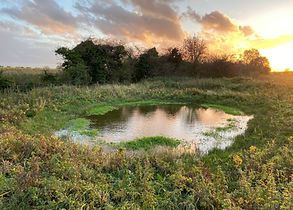
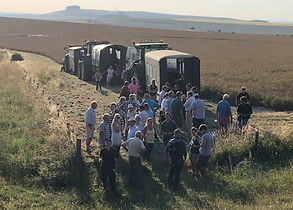
These images showcase some of the projects we have managed, illustrating both work in progress and the impact achieved.